Five days after Germany’s national elections on 23 February, the February edition of Cafè Europa analysed the election results, as well as the social, political, and economic context of the Union’s driving force. This edition was organised in collaboration with the Goethe-Institut Barcelona.
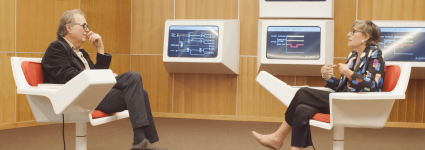
For this discussion, we welcomed Bernd Rother, former deputy director of the Chancellor Willy Brandt Foundation in Berlin, and Marc Bassets, Germany correspondent for El País, who shared their insights on the possible consequences for Europe’s future.
Bassets pointed out Europe’s impatience following the elections, highlighting Germany’s absence from the rapidly shifting international landscape. He linked this to Friedrich Merz’s shift in stance on relations with the United States, quoting: "Europe must become independent from the United States." The journalist called on Europe to take action: "This is Europe's moment of truth. It could be another one of those great leaps forward the EU makes every time it faces a major crisis."
Bassets also reviewed the election results, detailing the winners, losers, and regional voting patterns.
In his remarks, Bernd Rother addressed the key issues that shaped the electoral campaign: immigration, the war in Ukraine, and economic recession. He also emphasised the need for the new German government to revitalise its foreign policy. According to Rother, Merz believes that "we are at the worst point in Europe–US relations."
Another crucial topic discussed was the rise of the far right and whether the other parties can curb its influence through a cordon sanitaire. As Bassets pointed out, this challenge also involves addressing the concerns of AfD voters—but without adopting the party’s policies.
Thank you for following this edition of Cafè Europa! You can watch the full session on our YouTube channel and Spotify. Join us for future discussions on the last Friday of each month at 9 a.m.—your regular date with European current affairs.