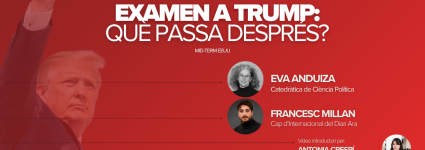
This Tuesday, November 10, Cafè Europa reopened the debate with a session of high-level analysis. Titled “Examining Trump: What Happens Next?”, political scientist Eva Anduiza broke down the key aspects of the recent midterm elections in the United States—elections marked by the materialization of the long-predicted “blue wave” and a sharp decline for the Republicans.
The starting point of the discussion left no room for doubt: the results are, in the expert’s words, “truly historic.” The Democratic Party secured control of the House of Representatives by winning 256 seats (45 more than in the previous term) and gained a majority in the Senate. This represents a complete institutional shift that effectively ties the hands of the Republican administration, severely limiting its legislative capacity.
During her presentation, Anduiza traced the root of this upheaval to the erosion of the president’s standing. The perception of corruption surrounding Donald Trump, combined with an immigration policy described as “extreme and highly violent,” triggered a strong mobilization among Democrats while simultaneously dampening enthusiasm within parts of the Republican base. This discontent was further compounded by public opposition to a potential war with Iran, rising oil prices, and growing apprehension regarding the impact of artificial intelligence—particularly concerning the significant resource consumption of data centers. In contrast, the Democratic bloc has successfully presented new faces—leaders with inspiring, charismatic, and pragmatic messages, such as James Talarico, Gina Hinojosa, and Abdul El-Sayed. While Trump’s direct endorsement has become an electoral liability for the Republicans, the Democrats have shown that they possess a solid bench of talent for their upcoming primaries.
The speaker highlighted a fundamental takeaway from these elections regarding the health of democracy: "Despite institutional erosion, the system still retains its core mechanism: if the citizenry is dissatisfied with the government, they can vote it out." Moving beyond a purely emotional "us-versus-them" dynamic, the campaign demonstrated a return to substantive, practical issues—specifically, the cost of living. A clear example is the new governor of Texas, Gina Hinojosa, who built her victory by focusing on public schools, the water consumption of data centers, and the influence of "tech-oligarchs"—issues that resonate with the daily lives of families.
This pragmatic shift has had a significant impact on the electoral demographic: the Latino vote—previously dissatisfied, yet fearful of ICE raids and xenophobic rhetoric—has swung back toward the Democrats. Regarding the ideological landscape, despite the presence of progressive voices, the party has solidified its position from the center, thanks to figures like Talarico, who is able to appeal to a collective sense of morality and steer voters away from despair. Finally, regarding the impact on Europe, Anduiza has ruled out a direct "contagion" effect on the European elections, given the unique nature of the North American context. Nevertheless, she issued a geopolitical warning: with no room for maneuver in domestic policy and facing the prospect of future congressional investigative committees, it is highly likely that Trump will double down on foreign policy—an arena with fewer checks and balances—which will require European partners to remain on high alert.
You can watch or listen to the full conversation from this edition of *Cafè Europa* on the official YouTube and Spotify channels.